





Dilip Kumar
Founder and Marketing Director

Dhanasekar G
Co-Founder & CMO
How B2B SaaS companies can turn search visibility into pipeline in the age of AI
Introduction: SEO is Not Dead, But Search Results Are
You can rank #1 and still lose the click.
How? Well, Google can answer the question before anyone reaches your site. ChatGPT, Perplexity, and Gemini can recommend three vendors without a single blue link involved.
This guide will break down my personal experience as CMO that drives MQLs using SEO and GEO strategies that actually work for B2B SaaS companies in 2026.
To start out, your buyers are often a buying committee of five or more people, from the RevOps lead evaluating integrations to the CFO scrutinizing the contract, who are already there, asking AI to research, compare, and shortlist software.
This is all before a single one of them fills out a demo form.
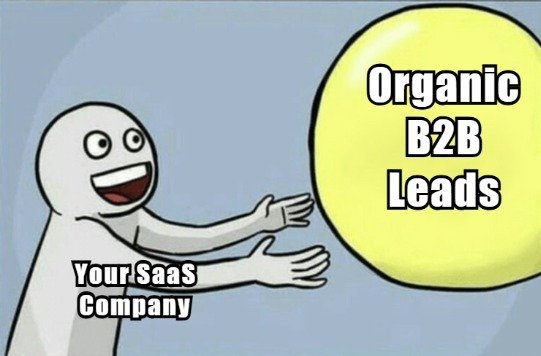
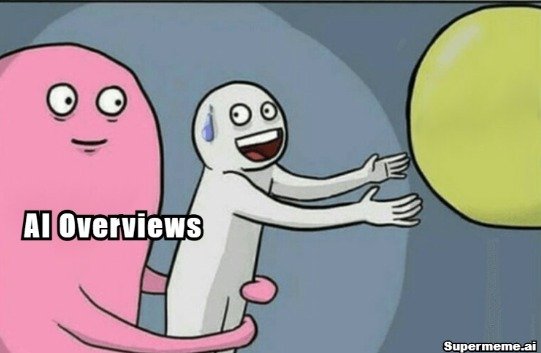
The data shows that AI Overviews cut organic click-through rates by more than half on the exact same query, and zero-click search is now the default outcome for a majority of Google searches.
That’s the issue this playbook is built around. Visibility is harder to earn and worth more once you have it.
The goal isn’t simply to rank anymore – It’s to become the source Google and AI systems use to answer the question and be the company Google recommends.
So here’s the 90-day playbook for doing both: winning traditional rankings and earning a place inside the AI-generated answer, without treating them as two separate jobs.
First, Understand What Changed
Search has moved through four eras: ten blue links ranked by keywords and backlinks, then semantic search that understood intent, then AI-generated answers synthesized from multiple sources, and now multi-source recommendation engines that skip the results page entirely. Each shift stacked on top of the last rather than replacing it.
Behind the scenes, both Google and the major AI platforms now use “query fan-out”: a single prompt gets broken into several concurrent sub-searches so the system can pull the best passage for each sub-question before writing a unified answer.
Google still matters
Crawlability, relevance, and authority remain the foundation. Generative engines still pull most of their source material from Google’s own index.
AI Overviews changed the SERP
Google now synthesizes an answer from multiple sources before a user sees a single organic listing, on roughly half of all US searches, and the coverage is highest in exactly the vertical B2B SaaS lives in.
In fact, technology-related queries trigger an AI summary at a notably higher rate than the average category. Google’s own guidance on AI features confirms the same eligibility and quality signals from traditional search still apply underneath.
ChatGPT/Perplexity changed the buying journey
Buyers ask “What’s the best CRM for a 50-person SaaS company?” instead of “best CRM software,” and get a shortlist back, not a list of links.
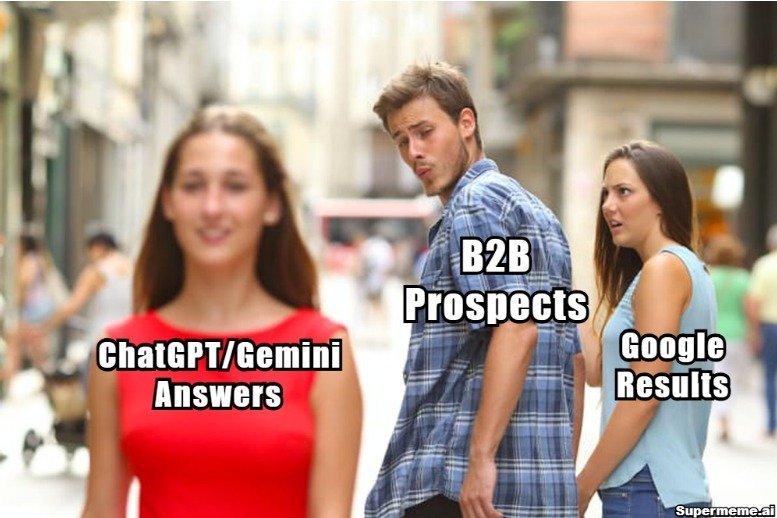
In B2B SaaS this shows up earlier than most teams expect: a technical evaluator asks AI “does [category] support SSO and SOC 2?” before a call is ever booked, and a finance stakeholder asks “what’s a typical ACV for [category] at our headcount?” long before procurement gets involved.
Multiple people on the buying committee are having these conversations with AI in parallel, and each one shapes the shortlist your sales team eventually sees.
The new search funnel
Search → AI answer → shortlist → validation → website → conversion. Every step in this playbook maps back to this funnel.
SEO vs AEO vs GEO: Stop Treating Them Like Separate Strategies
Three disciplines now govern visibility:
| Discipline | Goal | What you’re optimizing for |
| SEO | Rank in Google | Search visibility |
| AEO | Become the answer | Extractable answers |
| GEO | Get recommended by AI | Entity authority + mentions |
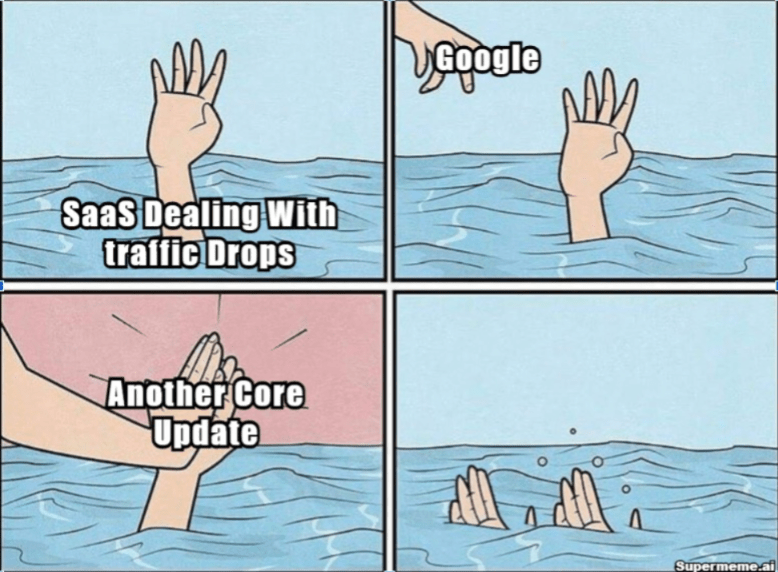
SEO gets you crawled and ranked. AEO gets your content pulled into featured snippets and AI Overviews as a direct answer. GEO gets your brand cited or recommended inside ChatGPT, Perplexity and Gemini responses, whether or not there’s a link attached.
The smartest SaaS strategy isn’t choosing SEO OR AEO OR GEO. It’s building pages that can perform across all three: crawlable and ranked, structured for extraction, and backed by enough brand signal that AI trusts you as a source.
Search Engine Land’s optimization guide makes the same point: these go beyond sequential upgrades – they’re overlapping requirements for the same page.
Step 1: Stop Chasing Traffic. Find Your Money Prompts
Start with bottom-funnel searches
- “[category] software”
- “best [category] software”
- “[competitor] alternatives”
- “[product] vs [competitor]”
- “[category] for [specific industry]”
- “[category] pricing”
Then find the prompts buyers ask AI
- “What’s the best [category] platform for a mid-market SaaS company?”
- “Compare [brand] vs [competitor] for enterprise teams.”
- “What should I look for when choosing [category] software?”
- “Does [brand] integrate with [common tool] and support SOC 2?”
Mine sales calls for the language
Pull real phrasing from sales calls, objections, customer success conversations, demos and lost-deal reasons.
In B2B SaaS, this is where the real money prompts live.
Simply put, its the security questionnaire language, the integration requirements, the “why did we lose to [competitor]” debrief.
Don’t invent AI prompts in a keyword tool. Find the questions your buying committee actually asks, in their own words, at every stage from technical evaluator to economic buyer.
Step 2: Map Your Buyer Journey to Search Intent
- TOFU — Problem discovery: “How do I solve X?”
- MOFU — Solution research: “How does X work?”
- BOFU — Vendor evaluation: “Best X software”
- Procurement/security layer: “Is [vendor] compliant with [standard]?” “What’s [vendor]’s uptime SLA?”
- AI discovery layer: “Which X software is best for a company like mine?”
A buyer can move from problem, to education, to comparison, to recommendation inside a single conversation, without ever hitting a traditional SERP.
Your content needs to answer well at whichever stage the AI happens to grab it, including the compliance and integration questions that show up once a deal gets serious.
Step 3: Build Pages AI Can Actually Understand
Answer the question directly
Don’t bury the answer under 800 words of throat-clearing. Lead with it.
Create extractable passages
Word count doesn’t predict citation; Ahrefs’ research on AI Overviews found almost no correlation between total length and citation rate.
What correlates strongly is semantic completeness: can one self-contained passage, ideally somewhere around 130-170 words, fully answer the question without leaning on the rest of the page?
Most citations are pulled from early in the document too, so don’t save your best answer for paragraph twelve.
Use clear headings
Format headings as the actual questions buyers ask, not vague topic labels.
Structure comparisons
Tables, specifications, pros/cons, use cases and alternatives. Data tables get extracted at roughly twice the rate of the same information written as prose.
Make claims easy to verify
Attach numbers, sources and specifics to what you say. Vague claims don’t get cited; verifiable ones do.
Use first-party expertise
Expert POV, original data, customer examples and actual product experience beat summarized consensus every time.
One more thing worth knowing: adding real screenshots, short explainer video and clean data tables alongside the text meaningfully lifts how often a page gets selected as a source, compared to plain paragraphs. Multimedia isn’t decoration here, it’s an extraction signal.
Write for the human who needs the answer and the machine that needs to extract it.
Step 4: Turn Your Product Pages Into Search Assets
Product, feature, category, comparison, alternative, pricing, and use-case pages can all be cited and help you rank in AI Overviews, especially for comparison and evaluation queries.
Most SaaS teams only optimize blog content and leave this commercial real estate untouched — including the pages a buying committee actually reads: security and trust pages, integration directories, and API documentation. Semrush’s SaaS AI search research points to the same gap across the category.
Don’t hide your product behind generic blog content
If your best evidence only lives in a blog post, AI has to work harder to connect it to your product. Put it on the page that’s actually trying to convert — your pricing page, your security page, your integration page.
Make product information machine-readable
- Clear specifications, not marketing copy
- Comparison tables instead of paragraphs
- Structured pricing and feature data
- Product/SoftwareApplication schema
Schema isn’t a guarantee; Google’s own documentation says it isn’t technically required to appear in AI features.
But structured data correlates with meaningfully higher selection rates, so treat it as a low-risk addition, not a magic switch.
One more technical check worth doing today: confirm your robots.txt and firewall rules actually allow GPTBot, PerplexityBot, and ClaudeBot in, and that your pricing, comparison and feature pages render as real HTML rather than an empty shell behind client-side JavaScript. A site an AI crawler can’t read is a site it can’t cite, no matter how good the content is.
Step 5: Build Topical Authority — Then Build Entity Authority
Traditional authority
Relevant backlinks, niche publications, industry sites, guest contributions, podcasts.
Entity authority
Get your brand, category and expertise mentioned together, with or without a link. Research shows unlinked brand mentions correlate with SaaS AI visibility roughly three times more strongly than traditional backlinks.
Places that matter: industry publications, comparison articles, Reddit, Quora, podcasts, review platforms, partner websites, expert interviews.
This is where B2B SaaS has an advantage most categories don’t: your buyers already trust G2, Capterra and TrustRadius reviews, and analyst coverage like a Gartner Magic Quadrant placement or a Forrester Wave mention, more than almost any other content type. Those are exactly the properties AI systems lean on for grounded, third-party validation.
AI Overviews in particular lean heavily on a handful of source types — YouTube, Reddit and Wikipedia alone account for a large share of citations, with the rest split between niche publications and your own domain. If you have no footprint on the first three, you’re starting from a real disadvantage. Semrush’s guide to generative engine optimization covers how to build this kind of off-site presence systematically.
AI needs context about who you are, what category you belong to, and why you’re credible. A hyperlink used to be the whole signal. Now it’s one signal among several.
Step 6: Become the Brand AI Recommends
Stop asking “do we rank #1?” Start asking: when someone asks AI about our category, are we mentioned at all?
Build a list of high-value prompts
50–100 commercial prompts is a reasonable starting benchmark.
Test ChatGPT, Gemini, Perplexity and Google
Run the same prompt set across each platform on a recurring basis. Visibility here behaves more like a probability than a fixed rank.
Track:
- Brand mentions
- Citations
- Recommendation position
- Competitor mentions
- Sentiment/context
- Referral traffic
Find where competitors appear and you don’t
That gap, the prompts where a rival gets recommended and you’re invisible, is your GEO gap analysis, and it’s a sharper prioritization tool than any keyword report.
Teams that take this seriously see it move fast. SaaS companies that fixed weak entity signals, un-gated their comparison content and opened up crawler access have gone from a handful of AI citations a month to several times that within 60-90 days, with a meaningful share of new sign-ups tracing back directly to ChatGPT and Perplexity referrals.
Step 7: Engineer Content That Gets Cited
This isn’t Step 3 again. Step 3 makes your site understandable. This step makes your information worth borrowing.
Generative engines increasingly evaluate sources on extractability, claim verification and quotation density, not link authority alone — this is the central finding of Princeton’s Generative Engine Optimization research, one of the first academic studies to measure what actually moves the needle in AI-generated answers. Give AI systems:
- Original research
- First-party data
- Expert opinions with names attached
- Specific, checkable claims
- Statistics
- Unique frameworks
- Proprietary insights
- Clear attribution
- Regularly refreshed facts
Give AI something worth borrowing, not something it has already read a hundred times from your competitors.
Step 8: Build for Humans First — Machines Second
Once AI sends the buyer your way, the job isn’t done. Cover:
- Short paragraphs, clear answers, visual hierarchy
- Comparison tables, screenshots, product demos
- FAQs, testimonials, customer proof
- Security, compliance and integration details a technical buyer needs before they’ll champion you internally
- Clear CTAsg
If AI sends you the buyer after doin 80% of their research, your website better finish the job. This matters more than it sounds: AI-referred visitors convert at meaningfully higher rates than standard organic traffic, so a weak page wastes a warmer lead than usual.
Step 9: Don’t Publish More. Publish Better — Then Refresh Relentlessly
Scale expertise, not content volume.
- Fewer generic articles, deeper commercial pages
- Expert contributions and original research over filler
- Regular refreshes of comparisons, statistics, and product details
- Updated references as the year rolls over
Freshness isn’t cosmetic. Citation sources inside AI Overviews turn over substantially within a couple of months, so what gets cited today may not next quarter.
Content updated recently gets pulled into AI answers at a noticeably higher rate than stale pages carrying the same information. Standing still means losing the spot you already earned.
The 30-Day AI Search Quick Win
Week 1 — Audit Identify 20 money keywords, 20 money prompts, 10 competitor pages and 10 AI queries worth tracking.
Week 2 — Upgrade Take your highest-value existing pages and add expert POV, original data, FAQs, comparisons, product screenshots, testimonials, clear answers and internal links.
Week 3 — Authority Target podcasts, publications, Reddit, partner content and industry sites for mentions and links.
Week 4 — Re-test Check mentions, citations, recommendations, rankings, organic CTR, AI referral traffic and leads.
Start with pages already sitting on page 1–2. Don’t start by publishing 50 new blog posts.
How to Measure SEO + AEO + GEO Without Fooling Yourself
Leading indicators: rankings for commercial keywords, impressions, AI Overview visibility, AI citations, brand mentions, recommendation position, citation share of voice, organic CTR, AI referral traffic.
Lagging indicators: demo requests, qualified leads, opportunities, pipeline, revenue, customer acquisition.
Track AI referrals separately
Set up custom segments in GA4 to isolate traffic from ChatGPT, Perplexity, Claude, and Gemini. Standard rank trackers and Search Console alone won’t tell you whether an impression came from a blue link or an AI summary, though Google Search Console’s Search Generative AI performance reports now break this out natively for supported queries. Either way, the overlap between a top-10 organic ranking and an actual AI citation is far from guaranteed, so don’t assume one predicts the other.
Ask buyers directly
Keep asking “How did you hear about us?” and “What was your full journey to booking time with us?” Then add one more: “Did you use ChatGPT, Gemini, Perplexity, or another AI tool while researching?”
What SaaS SEO Teams Need to Stop Doing
- Publishing thousands of generic AI articles
- Chasing traffic with zero commercial intent
- Writing 3,000 words because someone said “long-form ranks”
- Treating backlinks as the entire authority strategy
- Optimizing only for Google
- Ignoring product, pricing, security and comparison pages
- Measuring SEO exclusively by rankings
- Creating content without sales or customer input
- Assuming AI visibility equals traffic
- Treating AEO/GEO as a separate content silo
- Skipping G2, Capterra and analyst relations because they “don’t drive traffic” — they drive citations
The New Search Moat: Expertise + Evidence + Entity Authority
- Expertise — people who actually know the subject.
- Evidence — data, research, customer results, examples.
- Entity authority — your brand consistently associated with the category across the web.
- Structure — content machines can understand and extract.
- Distribution — being present where AI systems can discover you.
The brands most likely to win AI search won’t necessarily be the brands producing the most content. They’ll be the brands with the strongest combination of expertise, evidence and reputation, verified, consistent, and easy for a machine to piece together from across the web rather than parked in one place.
How SaaS Inbound Makes This Strategy Work
Traditional SEO gives you discoverability. AEO makes your answers extractable. GEO expands your visibility into AI recommendations.
First-party expertise differentiates you from generic AI-written content flooding every category. And commercial intent- the money keywords and money prompts running through this whole playbook- connects all of it back to revenue.
Which is exactly the type of impact SaaS Inbound achieves (some of our impact metrics are available on our homepage), some of which include driving pipeline growth from $1 million to $2.6 million in organic leads alongside scaling MQL traffic.
At SaaS Inbound, we treat AI visibility the way this playbook treats SEO: an ongoing process, not a project with a deadline.
- That means building these practices into your existing content strategy rather than running them as a side initiative, then using citations and brand mentions to pull your ICP straight into your funnel, not chasing visibility for its own sake.
- We’ve put this to work for SaaS and enterprise clients directly. For one enterprise cybersecurity company, we grew AI-mentioned pages to over 1,300 and AI-cited pages to 815, alongside roughly 15,000 additional monthly clicks.
Curious what that could look like for you? Book a free consultation
How B2B SaaS companies can turn search visibility into pipeline in the age of AI
Introduction: SEO is Not Dead, But Search Results Are
You can rank #1 and still lose the click.
How? Well, Google can answer the question before anyone reaches your site. ChatGPT, Perplexity, and Gemini can recommend three vendors without a single blue link involved.
How? Well, Google can answer the question before anyone reaches your site. ChatGPT, Perplexity, and Gemini can recommend three vendors without a single blue link involved.
This guide will break down my personal experience as CMO that drives MQLs using SEO and GEO strategies that actually work for B2B SaaS companies in 2026.
To start out, your buyers are often a buying committee of five or more people, from the RevOps lead evaluating integrations to the CFO scrutinizing the contract, who are already there, asking AI to research, compare, and shortlist software.
This is all before a single one of them fills out a demo form.
The data shows that AI Overviews cut organic click-through rates by more than half on the exact same query, and zero-click search is now the default outcome for a majority of Google searches.
That's the issue this playbook is built around. Visibility is harder to earn and worth more once you have it.
The goal isn't simply to rank anymore - It's to become the source Google and AI systems use to answer the question and be the company Google recommends.
So here's the 90-day playbook for doing both: winning traditional rankings and earning a place inside the AI-generated answer, without treating them as two separate jobs.
First, Understand What Changed
Search has moved through four eras: ten blue links ranked by keywords and backlinks, then semantic search that understood intent, then AI-generated answers synthesized from multiple sources, and now multi-source recommendation engines that skip the results page entirely. Each shift stacked on top of the last rather than replacing it.
Behind the scenes, both Google and the major AI platforms now use "query fan-out": a single prompt gets broken into several concurrent sub-searches so the system can pull the best passage for each sub-question before writing a unified answer.
Google still matters
Crawlability, relevance, and authority remain the foundation. Generative engines still pull most of their source material from Google's own index.
AI Overviews changed the SERP
Google now synthesizes an answer from multiple sources before a user sees a single organic listing, on roughly half of all US searches, and the coverage is highest in exactly the vertical B2B SaaS lives in.
In fact, technology-related queries trigger an AI summary at a notably higher rate than the average category. Google's own
guidance on AI features
confirms the same eligibility and quality signals from traditional search still apply underneath.
ChatGPT/Perplexity changed the buying journey
Buyers ask "What's the best CRM for a 50-person SaaS company?" instead of "best CRM software," and get a shortlist back, not a list of links.
In B2B SaaS this shows up earlier than most teams expect: a technical evaluator asks AI "does [category] support SSO and SOC 2?" before a call is ever booked, and a finance stakeholder asks "what's a typical ACV for [category] at our headcount?" long before procurement gets involved.
Multiple people on the buying committee are having these conversations with AI in parallel, and each one shapes the shortlist your sales team eventually sees.
The new search funnel
Search → AI answer → shortlist → validation → website → conversion. Every step in this playbook maps back to this funnel.
SEO vs AEO vs GEO: Stop Treating Them Like Separate Strategies
Three disciplines now govern visibility:
| Discipline | Goal | What you're optimizing for |
|---|---|---|
| SEO | Rank in Google | Search visibility |
| AEO | Become the answer | Extractable answers |
| GEO | Get recommended by AI | Entity authority + mentions |
SEO gets you crawled and ranked. AEO gets your content pulled into featured snippets and AI Overviews as a direct answer. GEO gets your brand cited or recommended inside ChatGPT, Perplexity and Gemini responses, whether or not there's a link attached.
The smartest SaaS strategy isn't choosing SEO OR AEO OR GEO. It's building pages that can perform across all three: crawlable and ranked, structured for extraction, and backed by enough brand signal that AI trusts you as a source.
Search Engine Land's optimization guide
makes the same point: these go beyond sequential upgrades - they're overlapping requirements for the same page.
Step 1: Stop Chasing Traffic. Find Your Money Prompts
Step 1: Stop Chasing Traffic. Find Your Money Prompts
Start with bottom-funnel searches
- "[category] software"
- "best [category] software"
- "[competitor] alternatives"
- "[product] vs [competitor]"
- "[category] for [specific industry]"
- "[category] pricing"
Then find the prompts buyers ask AI
- "What's the best [category] platform for a mid-market SaaS company?"
- "What should I look for when choosing [category] software?"
- "Compare [brand] vs [competitor] for enterprise teams."
- "Does [brand] integrate with [common tool] and support SOC 2?"
Mine sales calls for the language
Pull real phrasing from sales calls, objections, customer success conversations, demos and lost-deal reasons.
In B2B SaaS, this is where the real money prompts live.
Simply put, its the security questionnaire language, the integration requirements, the "why did we lose to [competitor]" debrief.
Don't invent AI prompts in a keyword tool. Find the questions your buying committee actually asks, in their own words, at every stage from technical evaluator to economic buyer.
Step 2: Map Your Buyer Journey to Search Intent
- TOFU — Problem discovery: "How do I solve X?"
- MOFU — Solution research: "How does X work?"
- BOFU — Vendor evaluation: "Best X software"
- Procurement/security layer: "Is [vendor] compliant with [standard]?" "What's [vendor]'s uptime SLA?"
- AI discovery layer: "Which X software is best for a company like mine?"
A buyer can move from problem, to education, to comparison, to recommendation inside a single conversation, without ever hitting a traditional SERP.
Your content needs to answer well at whichever stage the AI happens to grab it, including the compliance and integration questions that show up once a deal gets serious.
Step 3: Build Pages AI Can Actually Understand
Answer the question directly
Don't bury the answer under 800 words of throat-clearing. Lead with it
Create extractable passages
Word count doesn't predict citation; Ahrefs' research on AI Overviews found almost no correlation between total length and citation rate.
Word count doesn't predict citation;
Ahrefs' research on AI Overviews
found almost no correlation between total length and citation rate.
What correlates strongly is semantic completeness: can one self-contained passage, ideally somewhere around 130-170 words, fully answer the question without leaning on the rest of the page?
Most citations are pulled from early in the document too, so don't save your best answer for paragraph twelve.
Use clear headings
Format headings as the actual questions buyers ask, not vague topic labels.
Structure comparisons
Tables, specifications, pros/cons, use cases and alternatives. Data tables get extracted at roughly twice the rate of the same information written as prose.
Make claims easy to verify
Attach numbers, sources and specifics to what you say. Vague claims don't get cited; verifiable ones do.
Use first-party expertise
Expert POV, original data, customer examples and actual product experience beat summarized consensus every time.
One more thing worth knowing: adding real screenshots, short explainer video and clean data tables alongside the text meaningfully lifts how often a page gets selected as a source, compared to plain paragraphs. Multimedia isn't decoration here, it's an extraction signal.
Write for the human who needs the answer and the machine that needs to extract it.
Step 4: Turn Your Product Pages into Search Assets
Product, feature, category, comparison, alternative, pricing, and use-case pages can all be cited and help you
rank in AI Overviews
especially for comparison and evaluation queries.
Most SaaS teams only optimize blog content and leave this commercial real estate untouched — including the pages a buying committee actually reads: security and trust pages, integration directories, and API documentation.
Semrush's SaaS AI search research points to the same gap across the category.
Don't hide your product behind generic blog content
If your best evidence only lives in a blog post, AI has to work harder to connect it to your product. Put it on the page that's actually trying to convert — your pricing page, your security page, your integration page.
Make product information machine-readable
- Clear specifications, not marketing copy
- Comparison tables instead of paragraphs
- Structured pricing and feature data
- Product/SoftwareApplication schema
Schema isn't a guarantee; Google's own documentation says it isn't technically required to appear in AI features.
But structured data correlates with meaningfully higher selection rates, so treat it as a low-risk addition, not a magic switch.
One more technical check worth doing today: confirm your robots.txt and firewall rules actually allow GPTBot, PerplexityBot, and ClaudeBot in, and that your pricing, comparison and feature pages render as real HTML rather than an empty shell behind client-side JavaScript. A site an AI crawler can't read is a site it can't cite, no matter how good the content is.
Step 5: Build Topical Authority — Then Build Entity Authority
Traditional authority
Relevant backlinks, niche publications, industry sites, guest contributions, podcasts.
Entity authority
Get your brand, category and expertise mentioned together, with or without a link. Research shows unlinked brand mentions correlate with
SaaS AI visibility
roughly three times more strongly than traditional backlinks.
Places that matter: industry publications, comparison articles, Reddit, Quora, podcasts, review platforms, partner websites, expert interviews.
This is where B2B SaaS has an advantage most categories don't: your buyers already trust G2, Capterra and TrustRadius reviews, and analyst coverage like a Gartner Magic Quadrant placement or a Forrester Wave mention, more than almost any other content type. Those are exactly the properties AI systems lean on for grounded, third-party validation.
AI Overviews in particular lean heavily on a handful of source types — YouTube, Reddit and Wikipedia alone account for a large share of citations, with the rest split between niche publications and your own domain. If you have no footprint on the first three, you're starting from a real disadvantage
Semrush's guide to generative engine optimization covers how to build this kind of off-site presence systematically
AI needs context about who you are, what category you belong to, and why you're credible. A hyperlink used to be the whole signal. Now it's one signal among several.
Step 6: Become the Brand AI Recommends
Stop asking "do we rank #1?" Start asking: when someone asks AI about our category, are we mentioned at all?
Build a list of high-value prompts
50–100 commercial prompts is a reasonable starting benchmark.
Test ChatGPT, Gemini, Perplexity and Google
Run the same prompt set across each platform on a recurring basis. Visibility here behaves more like a probability than a fixed rank.
Track:
- Brand mentions
- Citations
- Recommendation position
- Competitor mentions
- Sentiment/context
- Referral traffic
Find where competitors appear and you don't
That gap, the prompts where a rival gets recommended and you're invisible, is your GEO gap analysis, and it's a sharper prioritization tool than any keyword report.
Teams that take this seriously see it move fast. SaaS companies that fixed weak entity signals, un-gated their comparison content and opened up crawler access have gone from a handful of AI citations a month to several times that within 60-90 days, with a meaningful share of new sign-ups tracing back directly to ChatGPT and Perplexity referrals.
Step 7: Engineer Content That Gets Cited
This isn't Step 3 again. Step 3 makes your site understandable. This step makes your information worth borrowing.
Generative engines increasingly evaluate sources on extractability, claim verification and quotation density, not link authority alone — this is the central finding of
Princeton's Generative Engine Optimization research one of the first academic studies to measure what actually moves the needle in AI-generated answers. Give AI systems:
- Original research
- First-party data
- Expert opinions with names attached
- Specific, checkable claims
- Statistics
- Unique frameworks
- Proprietary insights
- Clear attribution
- Regularly refreshed facts
Give AI something worth borrowing, not something it has already read a hundred times from your competitors.
Step 8: Build for Humans First — Machines Second
Once AI sends the buyer your way, the job isn't done. Cover:
- Short paragraphs, clear answers, visual hierarchy
- Comparison tables, screenshots, product demos
- FAQs, testimonials, customer proof
- Security, compliance and integration details a technical buyer needs before they'll champion you internally
- Clear CTAs
If AI sends you the buyer after doin 80% of their research, your website better finish the job. This matters more than it sounds: AI-referred visitors convert at meaningfully higher rates than standard organic traffic, so a weak page wastes a warmer lead than usual.
Step 9: Don't Publish More. Publish Better — Then Refresh Relentlessly
Scale expertise, not content volume.
- Fewer generic articles, deeper commercial pages
- Expert contributions and original research over filler
- Regular refreshes of comparisons, statistics, and product details
- Updated references as the year rolls over
Freshness isn't cosmetic. Citation sources inside AI Overviews turn over substantially within a couple of months, so what gets cited today may not next quarter.
Content updated recently gets pulled into AI answers at a noticeably higher rate than stale pages carrying the same information. Standing still means losing the spot you already earned.
The 30-Day AI Search Quick Win
Week 1 — Audit Identify 20 money keywords, 20 money prompts, 10 competitor pages and 10 AI queries worth tracking.
Week 2 — Upgrade Take your highest-value existing pages and add expert POV, original data, FAQs, comparisons, product screenshots, testimonials, clear answers and internal links.
Week 3 — Authority Target podcasts, publications, Reddit, partner content and industry sites for mentions and links.
Start with pages already sitting on page 1–2. Don't start by publishing 50 new blog posts.
Week 2 — Upgrade Take your highest-value existing pages and add expert POV, original data, FAQs, comparisons, product screenshots, testimonials, clear answers and internal links.
How to Measure SEO + AEO + GEO Without Fooling Yourself
Leading indicators: rankings for commercial keywords, impressions, AI Overview visibility, AI citations, brand mentions, recommendation position, citation share of voice, organic CTR, AI referral traffic.
Lagging indicators: rankings for commercial keywords, impressions, AI Overview visibility, AI citations, brand mentions, recommendation position, citation share of voice, organic CTR, AI referral traffic.
The Bottom Line
AI Overview visibility moves with every algorithm update, every competitor’s content refresh, and every new dataset Google trains on.
At SaaS inbound, we position our AI visibility strategy to keep your page getting AI cited and stay visible through the core updates with strong fundamentals.
Based on your SaaS company, we curate ABM, performance marketing, and AI visibility campaigns that keep SaaS visibility increasing consistently.
For AI overviews, we help you handle it just as you would any other SEO, which is a process and not a project with a deadline.
- Using the practices listed above in your current content strategy instead of doing it on a tangent.
- Using citations and brand mentions,to ultimately drive your ICP to your sales funnel.
To do this, SaaS Inbound has worked with companies to improve AI citations.
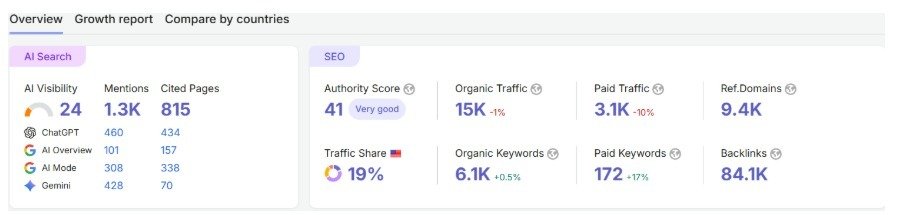
In fact, for an enterprise cybersecurity company, we improved KPIs, such as increasing monthly traffic 15,000 clicks with AI-mentioned pages to over 1300 and 815 AI cited pages.
Want to know what that could look like for you? Book a free consultation call!